Nizamabad Black Pottery and Mubarakpur Silk: A Shopper's Guide
Shop Azamgarh's famous crafts — Nizamabad black pottery and Mubarakpur Banarasi silk sarees. What to buy, how to spot quality and where to stay.
By The Mani Lodge · · 9 min read
Nizamabad black pottery and Mubarakpur Banarasi silk: a shopper's guide
Azamgarh district is home to two distinct craft traditions that rarely get the national attention they deserve: the striking black pottery of Nizamabad and the fine Banarasi-style silk weaving of Mubarakpur. For travellers with an interest in handicrafts, textiles, or simply bringing home something genuinely local, these two crafts are worth understanding before you shop. This guide walks through what makes each craft special, what to look for, and how to shop sensibly.
Nizamabad: the story behind the black pottery
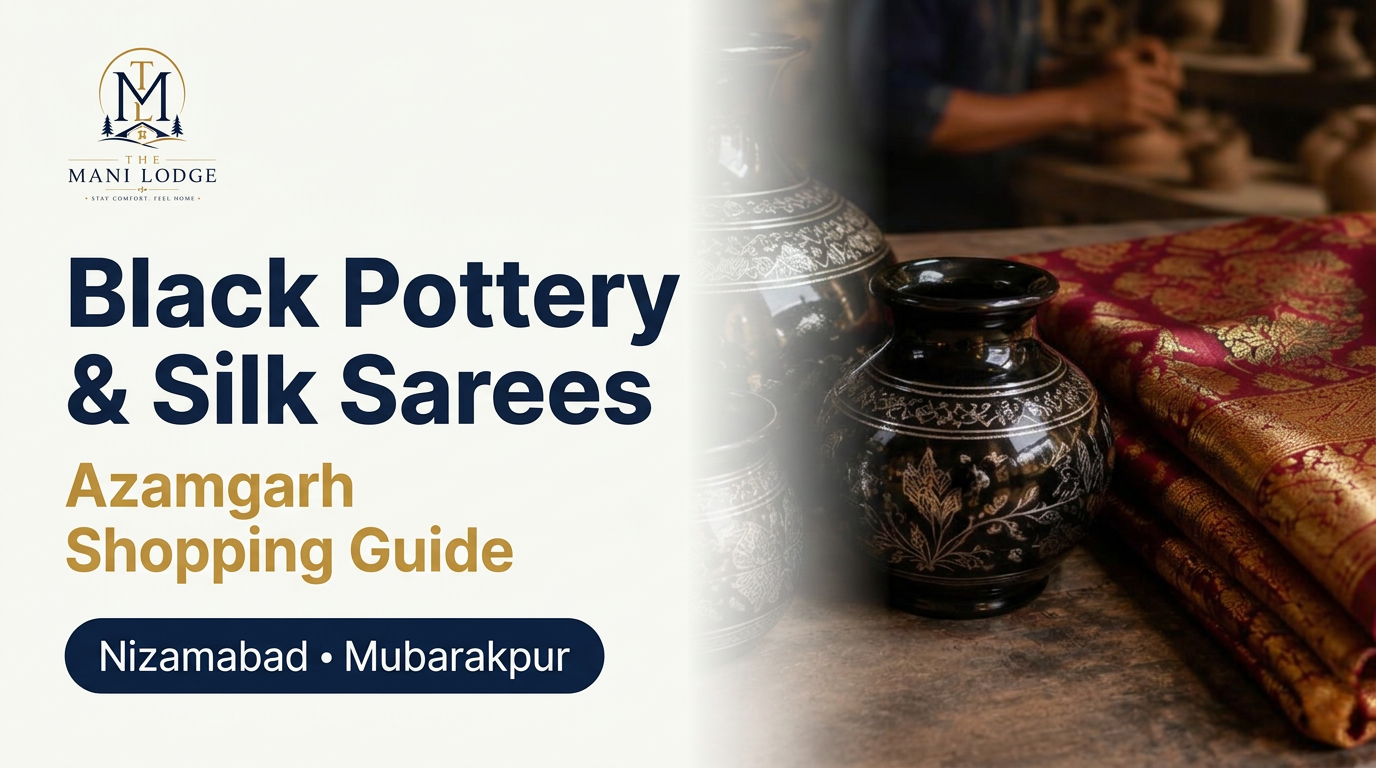
Nizamabad, a small town within Azamgarh district, has been producing its distinctive black pottery for generations, passed down through families of traditional artisans. Unlike the reddish terracotta commonly seen across much of India, Nizamabad pottery is known for its deep black finish, achieved through a specific firing process, and its fine silver-coloured engraved detailing on the surface.
- The black colour comes from a particular firing technique using specific clay and smoke conditions during the kiln process, a method refined over generations.
- After firing, artisans etch intricate floral, geometric, or figurative patterns into the surface, often filled in with a silvery metallic pigment that creates a striking contrast against the black base.
- This craft has been recognised with a Geographical Indication (GI) tag, acknowledging its unique regional origin and traditional production method.
What products are typically made
Nizamabad's artisans produce a range of items, from decorative pieces to functional household objects:
| Product Type | Typical Use |
|---|---|
| Decorative vases and pots | Home décor, gifting |
| Surahis (water vessels) | Traditional water storage, decorative use |
| Figurines and small sculptures | Collectibles, gifting |
| Ashtrays and small bowls | Functional décor items |
| Jewellery boxes | Gifting, personal use |
Each piece is typically handmade, which means no two items are perfectly identical — a feature collectors and buyers often value rather than see as a flaw.
How to identify genuine Nizamabad pottery
Given the craft's growing recognition, it's worth knowing a few basics to identify authentic pieces:
- A genuine deep black finish, achieved through the traditional firing process, rather than a painted-on black surface.
- Fine, hand-etched silver detailing, with visible texture under close inspection rather than a flat, printed pattern.
- Slight variations in finish and shape between pieces, since these are handmade rather than mass-manufactured.
- Reasonable weight for the size of the piece, consistent with traditional clay firing methods.
If you're buying directly from artisans or known local sellers, you can generally ask about the specific firing and etching process — most craftspeople are happy to explain their technique, and this is also a good way to gauge authenticity.
Mubarakpur: the Banarasi silk connection
Mubarakpur, another town within Azamgarh district, has long been a centre for silk and cotton weaving, closely tied to the broader Banarasi weaving tradition centred in nearby Varanasi. Many weavers in Mubarakpur produce sarees and fabrics in styles closely associated with Banarasi silk, often at more accessible price points than those found in Varanasi itself.
- Mubarakpur is known for both silk and cotton weaving, with a strong tradition of handloom work passed down through generations of weaving families.
- The town's weavers produce sarees, dupattas, and fabric lengths featuring intricate zari (metallic thread) work, floral motifs, and traditional Banarasi-style borders.
- Powerloom and handloom production both exist in the region, and understanding the difference matters if you're specifically seeking handwoven pieces.
Handloom vs powerloom: what buyers should know
This distinction matters a great deal when shopping for Banarasi-style silk from Mubarakpur:
- Handloom pieces are woven manually on traditional looms, generally take longer to produce, and often carry a higher price reflecting the skill and time involved.
- Powerloom pieces are machine-woven, generally faster to produce and more affordable, but typically lack the fine irregularities and craftsmanship markers of genuine handloom work.
- Genuine handloom sarees often show subtle, natural variations in weave density and pattern alignment, while powerloom pieces tend to look more mechanically uniform.
- If authenticity and handloom craftsmanship matter to you, it's worth asking directly and, where possible, buying from weavers or cooperatives who can speak to the specific production process.
What to look for when buying silk in Mubarakpur
- Zari work quality — genuine zari (traditionally silver or gold thread, though modern pieces often use metallic polyester blends) should feel slightly raised and textured rather than flat-printed.
- Weight and drape — pure silk generally has a specific weight and fall; synthetic blends tend to feel lighter and drape differently.
- Border and pallu detailing — intricate, dense patterning on the border and pallu (the decorative end of a saree) is a hallmark of quality Banarasi-style weaving.
- Price consistency — if a price seems unusually low for what's described as pure silk handloom work, it's worth asking more questions, since pure silk and handwoven labour naturally cost more than blended or machine-made alternatives.
Shopping practically: a few ground rules
Whether you're buying pottery from Nizamabad or silk from Mubarakpur, a few general shopping habits serve travellers well:
- Compare a few pieces or pieces from a few sellers before deciding, rather than buying the very first item you see.
- Ask about the production process — genuine artisans and weavers are usually willing to explain their craft, and their answers often reveal a lot about authenticity.
- Negotiate respectfully where appropriate, keeping in mind that these are often handmade goods representing real time and skill, not mass-manufactured products.
- If travelling with fragile pottery, ask for proper packing material, and consider carrying it as hand luggage rather than checked baggage if flying onward from Varanasi or Gorakhpur.
Planning a short shopping trip from Azamgarh
Both Nizamabad and Mubarakpur are within reasonable travelling distance of Azamgarh town, making them feasible as a half-day or full-day excursion if you're based at a hotel near the station. A practical approach:
- Start early in the day, allowing time to travel to the artisan clusters and browse without rushing.
- Carry cash, as many smaller artisan shops and weaving units may not have card or digital payment facilities readily available.
- Dedicate separate time blocks to pottery and silk shopping if you want to see both, since they are in different parts of the district.
- Return to your base — for instance, The Mani Lodge, close to Azamgarh railway station — to rest and safely store your purchases before onward travel.
Gifting and bringing crafts home
Both Nizamabad pottery and Mubarakpur silk make distinctive, meaningful gifts precisely because they are not widely available outside the region. A small black pottery vase or a length of handwoven silk fabric carries a story of local craftsmanship that's harder to find in mass-market shops elsewhere. If you're travelling by train afterward, packing pottery securely and keeping silk pieces folded neatly in a breathable bag helps preserve them for the journey home.
Why these crafts matter beyond shopping
Supporting traditional artisans in Nizamabad and weavers in Mubarakpur isn't just about acquiring a souvenir — it's a direct way of sustaining livelihoods tied to skills passed down over generations, in crafts that face real competition from cheaper, mass-produced alternatives. Travellers who take the time to understand and buy thoughtfully from these communities contribute, in a small way, to keeping these traditions alive for future generations of artisans and weavers.
Combining crafts shopping with your stay in Azamgarh
If you're planning a trip around exploring Nizamabad pottery and Mubarakpur silk, it helps to base yourself somewhere convenient, affordable, and close to transport links. Staying at The Mani Lodge, just 20 metres from Azamgarh railway station, means you can head out early for your shopping excursion and return easily at the end of the day, without worrying about navigating unfamiliar roads late in the evening. Whether you choose a Standard Room for a short stopover or a Family Room if you're travelling with others, a reliable base makes the whole shopping trip considerably smoother.
Final thoughts
Nizamabad's black pottery and Mubarakpur's Banarasi silk represent two sides of Azamgarh's lesser-known craft heritage — one rooted in clay and fire, the other in thread and loom. Both reward a little patience and curiosity from the traveller willing to look beyond the obvious tourist circuit. For questions about planning your visit or arranging your stay nearby, reach out via contact or call +91 93076 14429.
Caring for your pottery and silk purchases
A little care after purchase helps these handmade items last well:
- Pottery: Avoid dropping or knocking pieces against hard surfaces; wipe with a soft, dry cloth rather than soaking in water, since some decorative finishes are not fully waterproof.
- Silk: Store folded in a breathable cotton cloth rather than plastic, air it out occasionally, and avoid direct, prolonged sunlight, which can fade natural dyes over time.
- Keep original packaging or receipts where possible, especially if a seller offers any verification of handloom or traditional-process authenticity.
Frequently Asked Questions About Nizamabad Pottery and Mubarakpur Silk
What makes Nizamabad pottery different from regular terracotta?
Nizamabad pottery is known for its distinctive black finish, achieved through a traditional firing process, combined with fine silver-coloured engraved detailing, setting it apart from the more common reddish terracotta found elsewhere.
Is Mubarakpur silk the same as Varanasi's Banarasi silk?
Mubarakpur produces silk and cotton weaving closely tied to the broader Banarasi weaving tradition, often at more accessible prices, though buyers should check whether a specific piece is handloom or powerloom made.
Can I visit Nizamabad and Mubarakpur as day trips from Azamgarh town?
Yes, both are within reasonable travelling distance of Azamgarh town and can generally be covered as a half-day or full-day excursion, depending on how much time you spend at each location.
Where should I stay if I'm planning a shopping trip to these craft towns?
A centrally located, affordable hotel near Azamgarh railway station works well as a base. The Mani Lodge offers convenient access to transport links for day trips to both Nizamabad and Mubarakpur.
Staying in Azamgarh?
Clean AC rooms & dorm beds, 20 m from Azamgarh Railway Station.
Book on WhatsApp