Places to Visit in Azamgarh: Temples, Heritage and Hidden Corners
Discover the best places to visit in Azamgarh — temples, ashrams, heritage towns and craft villages — plus where to stay near the railway station.
By The Mani Lodge · · 8 min read
Azamgarh is more than a stopover
Mention Azamgarh to someone outside Uttar Pradesh and you may get a blank look, or at best a vague memory of it being a railway junction town somewhere in the eastern part of the state. But Azamgarh carries a layered history and a quiet cultural weight that rewards anyone willing to slow down for a day or two. This is the land connected to the legendary scholar-traveller Rahul Sankrityayan, to the poet and lyricist Kaifi Azmi, and to the Islamic scholar Shibli Nomani — names that shaped Hindi and Urdu literature and Islamic scholarship far beyond this district's borders. Add to that the famous Nizamabad black pottery, the shimmering Banarasi silk sarees woven in Mubarakpur, and a handful of temples and riverside spots, and Azamgarh starts to look like a destination worth exploring rather than just passing through.
If you are planning a visit — whether for a wedding, business, or simple curiosity — basing yourself at a convenient, affordable stay like The Mani Lodge, right by the railway station, makes it easy to explore these places over a day or two without worrying about logistics.
Rahul Sankrityayan's connection to Azamgarh
Rahul Sankrityayan, often called the father of Hindi travel literature, was born in Azamgarh district, and his legacy as a scholar, linguist, and relentless traveller is a source of regional pride. He wrote extensively on Buddhism, history, and travel, and his work still influences how Hindi literature approaches the genre of the travelogue. While visiting Azamgarh, many literature enthusiasts like to explore references to his life and work through local institutions and conversations with residents who take quiet pride in this connection. If you're interested in literary history, it's worth asking locally about events or small exhibitions that occasionally mark his contribution to Hindi letters.
Kaifi Azmi and the poetic heritage of the region
Azamgarh's Mijwan village is known as the birthplace of Kaifi Azmi, the celebrated Urdu poet and lyricist whose work shaped Hindi cinema's golden era of songwriting and whose activism left a mark on social development in the area. The Mijwan Welfare Society, founded in his memory, continues work related to women's empowerment and craft development in the region, including supporting traditional embroidery and weaving skills. Visitors interested in literary and cultural history often find a trip to Mijwan a meaningful addition to an Azamgarh itinerary, offering a sense of how poetry and social work intertwined in this corner of UP.
Shibli Nomani and Azamgarh's scholarly tradition
Shibli Nomani, the noted Islamic scholar, historian, and reformer, is closely associated with Azamgarh, where the Darul Musannifin Shibli Academy stands as an institution dedicated to research and scholarship in Islamic history and literature. For visitors interested in educational and intellectual history, this institution reflects Azamgarh's long-standing role as a centre of learning in eastern Uttar Pradesh, a reputation that predates its modern identity as a transit and trading town.
Nizamabad's black pottery: a craft worth seeing up close
A short distance from Azamgarh town, the village of Nizamabad is known across India for its distinctive black pottery, created using a unique firing technique that gives the terracotta its deep, almost metallic black sheen, often decorated with silver-coloured engraved patterns. Artisans here have practised this craft across generations, and watching the process — from shaping the clay to the final firing — offers a genuine glimpse into a living craft tradition rather than a museum display. If pottery and handicrafts interest you, allocate a few hours for a visit to Nizamabad as part of your Azamgarh trip; it's an easy addition to a day plan when you are based centrally near the station.
Mubarakpur and its Banarasi silk sarees
Many travellers are surprised to learn that some of the finest Banarasi-style silk sarees are actually woven not in Varanasi itself but in Mubarakpur, a town in Azamgarh district with a long tradition of handloom weaving. The intricate zari work and rich silk textures produced here supply markets across the country, and a visit to see the handlooms in action — the rhythmic clack of the loom, the patience behind every inch of brocade — is a worthwhile cultural experience for anyone interested in textiles and craftsmanship. If you plan to shop, it helps to go with some idea of what you're looking for, as the variety of weaves and patterns can be extensive.
Durvasa Rishi Ashram: a quieter, spiritual stop
For travellers interested in the religious and spiritual side of the region, the Durvasa Rishi Ashram is associated with the sage Durvasa of Hindu mythology and draws visitors seeking a calmer, reflective stop away from the bustle of the main town. It's the kind of place best visited without rushing — a short walk, a few quiet minutes, and a sense of connecting with a much older layer of the region's identity.
Bhairav Baba temple, Mehnagar
In Mehnagar, within Azamgarh district, the Bhairav Baba temple is a site of local religious significance, drawing devotees especially around specific festival dates through the year. If your trip coincides with a local festival or a weekend, you may find the temple more lively with visitors and vendors, which can be an interesting cultural experience in itself, beyond the religious significance of the site.
The Tamsa river and everyday Azamgarh life
The Tamsa river, also known locally in various references connected to the region's geography and history, flows through parts of this area and has been mentioned in classical Indian literature. While it may not be a dramatic tourist attraction in the way a hill station or beach would be, a quiet walk or drive along stretches of the river gives you a sense of the everyday rhythm of life here — farmers, fishermen, children, and the slow pace that defines much of rural eastern UP.
Planning a simple one or two-day Azamgarh itinerary
Here's a practical way to structure a short visit:
Day 1: Arrive by train, check into your room near the station, rest, and head out in the afternoon to explore Mubarakpur's weaving lanes or Nizamabad's pottery village, depending on which is logistically easier from where you're staying that day.
Day 2: Visit the Durvasa Rishi Ashram or the Bhairav Baba temple in Mehnagar if you have a spiritual or cultural interest, and spend some time in Azamgarh town itself, exploring the local market, before heading back for your onward journey.
If you are short on time, prioritise based on your personal interest — craft lovers should head straight for Nizamabad and Mubarakpur, while those drawn to literary and spiritual history should focus on Mijwan, the Shibli Academy references, and Durvasa Rishi Ashram.
Where to stay while exploring Azamgarh
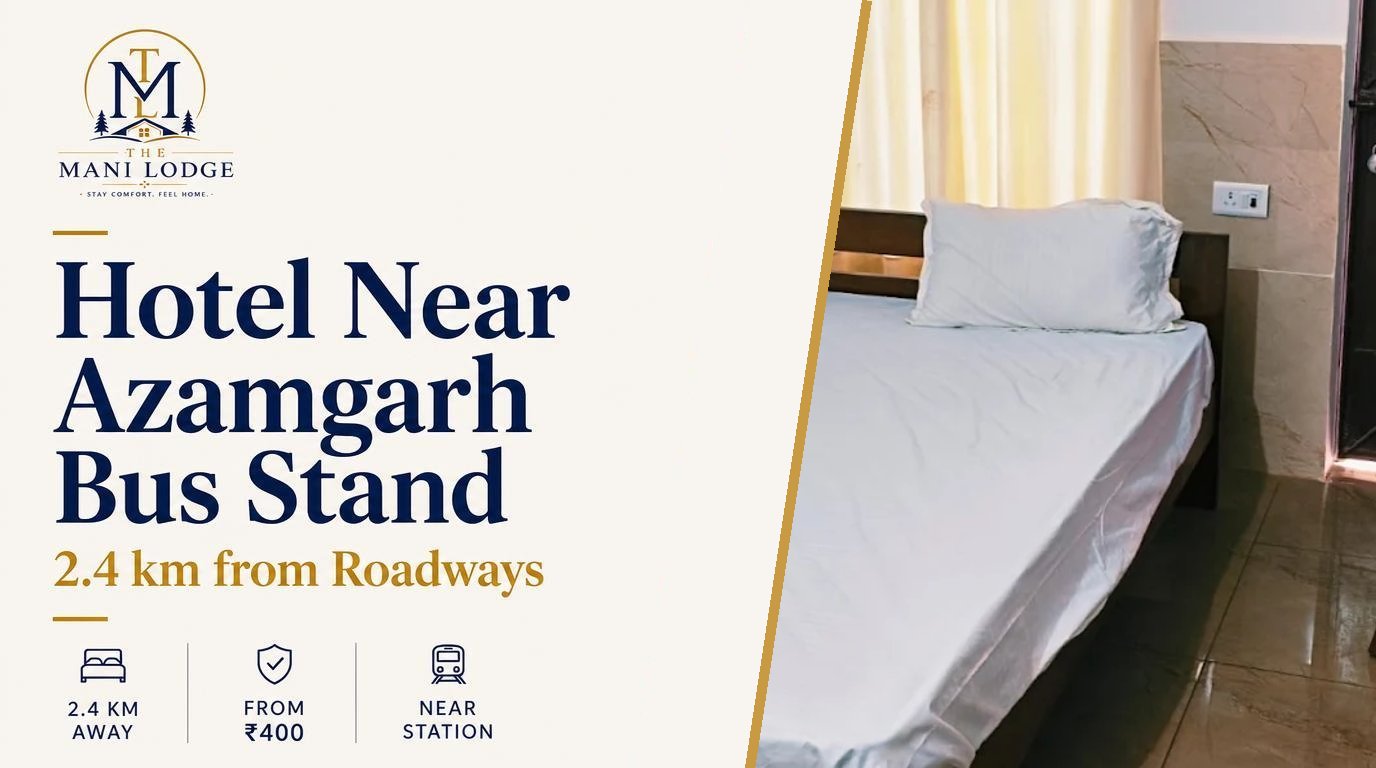
Since most of these sites require some travel within the district, staying centrally — close to the railway station and main transport links — makes a real difference to how much you can comfortably see in a day. The Mani Lodge works well for this kind of exploratory trip: it's walking distance from the station, keeps costs predictable with room rates from ₹400 for a dormitory bed to ₹1600 for a Family Room, and the staff are generally familiar with giving basic directions to nearby attractions. Check amenities for what's included, and call +91 93076 14429 to confirm your stay before arriving.
A region shaped by scholars, poets, and artisans
What makes Azamgarh worth visiting is not one single landmark but the accumulation of smaller stories — a poet's childhood village, a scholar's academy, a potter's wheel turning in Nizamabad, a weaver's loom in Mubarakpur. Taken together, they paint a picture of a district that has quietly contributed to India's literary, spiritual, and craft heritage far beyond what its size might suggest.
A note on travelling respectfully
When visiting craft villages like Nizamabad or Mubarakpur, remember that you are stepping into people's working lives, not a curated tourist attraction. A polite request before photographing an artisan at work, a willingness to buy directly from the makers rather than only browsing, and a bit of patience with the pace of rural travel will make your visit more rewarding and respectful. Similarly, at religious sites like Durvasa Rishi Ashram or the Bhairav Baba temple, following local customs around dress and conduct goes a long way in making your visit smooth and welcomed by the community.
Frequently Asked Questions About Visiting Azamgarh
1. What are the must-visit places in Azamgarh for a short trip? Nizamabad (black pottery), Mubarakpur (Banarasi silk weaving), the Durvasa Rishi Ashram, and the Bhairav Baba temple in Mehnagar are commonly recommended stops, alongside general exploration of Azamgarh town itself.
2. Is Azamgarh connected to any famous personalities? Yes. Azamgarh district is associated with Rahul Sankrityayan, the pioneering Hindi travel writer and scholar, the Urdu poet Kaifi Azmi (born in Mijwan), and the Islamic scholar Shibli Nomani.
3. How many days do I need to see the main sites in Azamgarh? A focused one to two-day visit is usually enough to cover the key craft villages and a couple of religious or cultural sites, especially if you are based centrally near the railway station.
4. Where is a convenient place to stay while sightseeing in Azamgarh? The Mani Lodge, located about 20 metres from Azamgarh railway station, is a practical base, with room rates starting at ₹400 for a dormitory bed. Call +91 93076 14429 to book.
Staying in Azamgarh?
Clean AC rooms & dorm beds, 20 m from Azamgarh Railway Station.
Book on WhatsApp